ABRNEWS247 | Business News | March 9, 2026
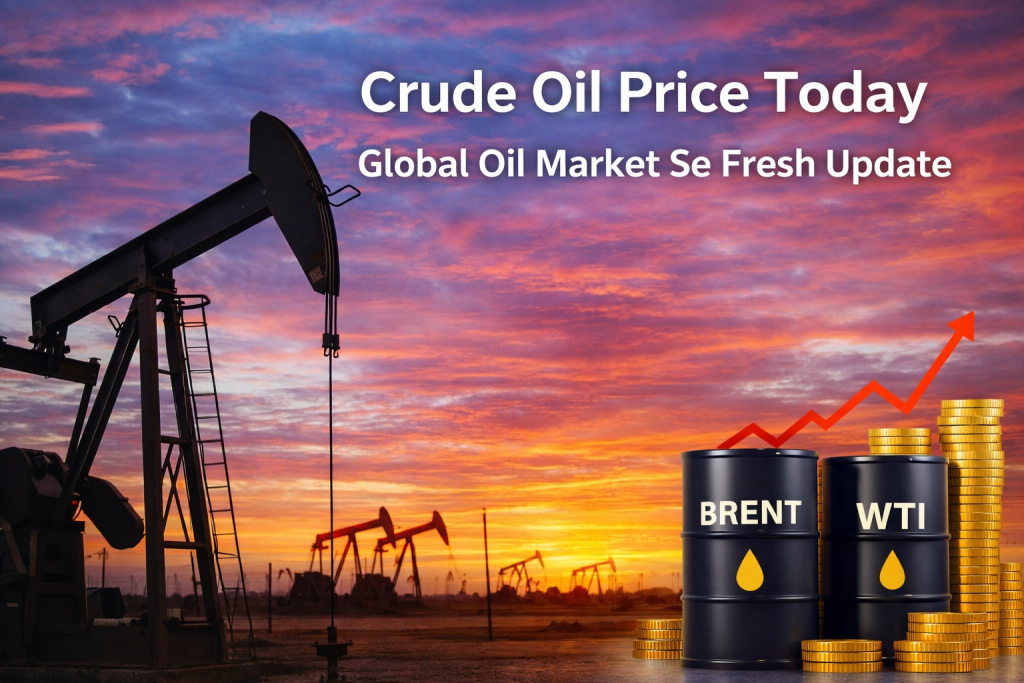
Crude Oil Price Today: Global Oil Market Se Fresh Update
The crude oil price in the global market continues to be one of the most closely watched economic indicators worldwide. Energy markets, investors, governments, and businesses monitor this price because it affects transportation costs, fuel prices, and global economic activity.
Recent developments in the international energy market show that the crude oil price is experiencing fluctuations due to multiple factors including supply decisions by oil-producing countries, geopolitical tensions, and global demand patterns.
Oil remains one of the most essential commodities in the world economy. Changes in the crude oil price often influence inflation levels, currency markets, and stock markets across many countries.
Brent and WTI Benchmarks Driving Crude Oil Price
The global crude oil price is primarily determined by two key benchmarks: Brent Crude and West Texas Intermediate (WTI). These benchmarks are widely used by traders and analysts to track global oil price trends.
Brent crude represents oil extracted from the North Sea and is commonly used as a benchmark for oil prices in Europe, Africa, and the Middle East. WTI crude, on the other hand, is a benchmark mainly used in the United States.
Market analysts say that movements in Brent and WTI benchmarks significantly impact the crude oil price, influencing energy markets worldwide.
More official oil market statistics can be found on the U.S. Energy Information Administration website:
https://www.eia.gov
Factors Affecting Crude Oil Price Today
Several global factors influence the crude oil price in international markets.
1. Oil Production Levels
Production decisions made by oil-producing countries and organisations such as OPEC play a major role in determining the crude oil price. When production is reduced, oil supply decreases, often pushing prices higher.
On the other hand, increased production can lead to lower crude oil price levels if global demand remains stable.
2. Geopolitical Developments
Geopolitical tensions in oil-producing regions can significantly impact global energy supply. Conflicts, sanctions, or political instability can disrupt oil exports and cause sudden movements in the crude oil price.
Energy traders closely monitor global political developments because they often influence market expectations.
3. Global Economic Growth
Economic growth in major economies such as the United States, China, and India directly affects energy demand. When economies expand, industrial activity and transportation increase, which boosts oil consumption.
As a result, stronger economic growth can lead to higher crude oil price levels in global markets.
Impact of Crude Oil Price on Global Economy
The crude oil price has a major impact on the global economy. Rising oil prices increase transportation costs, which can lead to higher prices for goods and services.
For countries that rely heavily on oil imports, fluctuations in the crude oil price can significantly affect national budgets and trade balances.
Similarly, oil-exporting countries benefit when the crude oil price today increases, as higher prices generate greater export revenue.
Oil Market Volatility and Investor Interest
Investors and financial markets pay close attention to movements in the crude oil price. Oil price changes can influence stock markets, energy company shares, and even currency exchange rates.
Many institutional investors track the crude oil price to understand broader economic trends and plan investment strategies.
Energy companies also monitor oil prices closely because their revenues depend heavily on the crude oil price.
Renewable Energy and Future Oil Demand
While renewable energy sources such as solar and wind power are growing rapidly, oil remains a crucial energy source for many industries.
Aviation, shipping, and heavy manufacturing sectors still rely heavily on petroleum fuels. As a result, the crude oil price continues to play an important role in the global energy system.
Experts believe that even with the transition to renewable energy, oil will remain a significant part of the global energy mix for several decades.
Outlook for Crude Oil Price
Market analysts believe that the crude oil price may remain volatile in the coming months. Economic recovery trends, supply decisions by major producers, and geopolitical developments will likely influence future price movements.
Many experts expect that global energy demand will continue to grow, especially in emerging markets. This demand growth may support stable or gradually increasing crude oil price levels over the long term.
Conclusion
The crude oil price remains one of the most important indicators of global economic activity. From energy markets to national economies, oil prices influence many aspects of the modern world.
As global energy demand continues to evolve, investors, policymakers, and businesses will continue to closely monitor the crude oil price and its impact on international markets.
crude oil prices
light crude
crude oil apr clf stock
Q1. Is oil expected to go up or down?
Oil prices can move both up and down depending on global supply, demand, and geopolitical developments. If major oil-producing countries reduce production or global demand increases, crude oil prices may rise. However, economic slowdowns or increased supply can cause oil prices to fall.
Q2. What countries produce the most oil?
The world’s largest oil-producing countries include the United States, Saudi Arabia, Russia, Canada, and Iraq. These countries play a major role in the global energy market and influence the overall crude oil price through production levels and export volumes.
Q3. What is the crude oil price today?
Crude oil prices change frequently based on global market conditions. The most commonly tracked benchmarks are Brent crude and West Texas Intermediate (WTI). These benchmarks help traders and analysts monitor the latest crude oil price trends worldwide.
Q4. Why did gas go up?
Gas prices usually increase when crude oil prices rise. Factors such as higher global demand, supply disruptions, geopolitical tensions, refinery maintenance, and transportation costs can lead to higher fuel prices for consumers.