Published: July 29, 2026
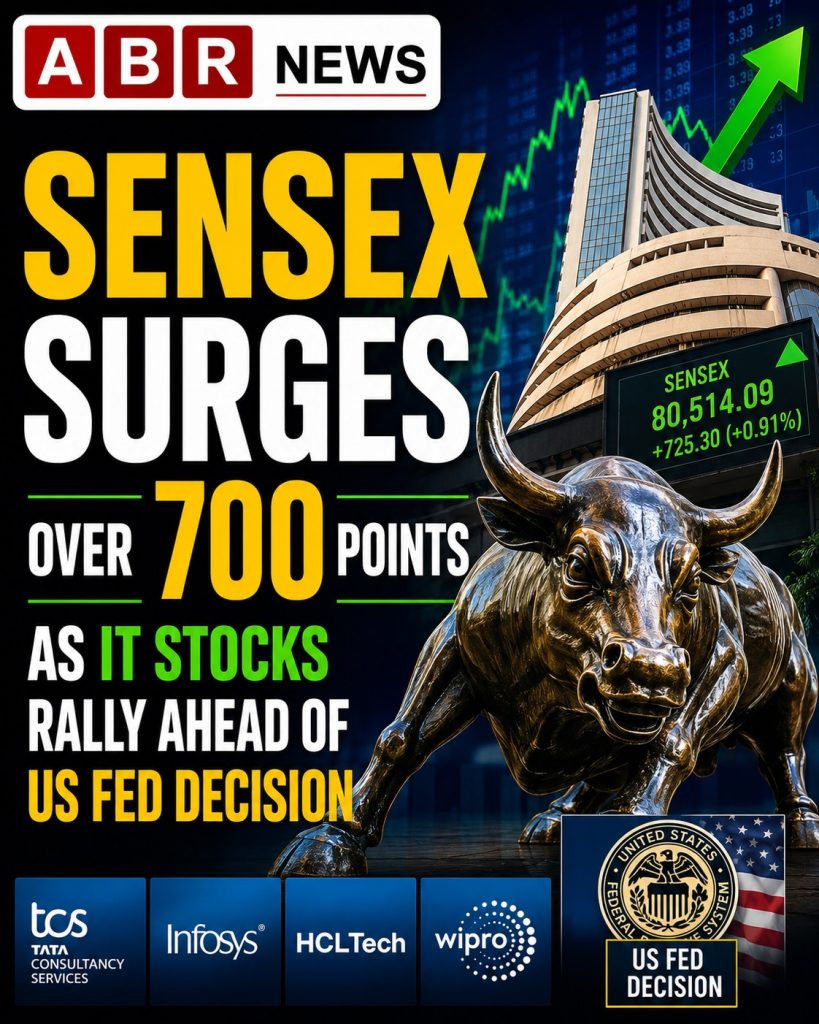
Indian benchmark indices witnessed a strong rally on Tuesday as the BSE Sensex surged over 700 points, while the NSE Nifty 50 traded firmly in the green. The rally was largely driven by strong buying in Information Technology (IT) stocks, as investors remained optimistic ahead of the upcoming US Federal Reserve’s interest rate decision.
Positive global market sentiment, sustained Foreign Portfolio Investor (FPI) inflows, and encouraging corporate earnings also supported the upward momentum in the Indian stock market.
Market Opens on a Strong Note
The Indian equity market started the trading session with robust gains, supported by buying across large-cap stocks.
Key highlights included:
- Sensex gained more than 700 points during intraday trading.
- Nifty 50 crossed important resistance levels.
- IT stocks emerged as the biggest sectoral gainers.
- Banking and Financial stocks also witnessed healthy buying.
Analysts believe the market is reacting positively to expectations that the US Federal Reserve may provide clarity on future interest rate movements.
IT Stocks Lead the Rally
The Information Technology sector was the biggest contributor to the market rally.
Major IT companies that remained in focus included:
- Infosys
- Tata Consultancy Services (TCS)
- HCL Technologies
- Wipro
- Tech Mahindra
Investor confidence improved as expectations of stable global technology spending and a favorable US economic outlook boosted sentiment.
Why Is the US Fed Decision Important?
The US Federal Reserve’s monetary policy decision has a significant impact on global financial markets.
Investors are closely watching:
- Interest rate announcements.
- Inflation outlook.
- Future policy guidance.
- Economic growth projections.
Any indication of a pause or reduction in interest rate hikes could positively influence emerging markets like India.
Other Factors Supporting the Market
Apart from IT stocks, several other factors contributed to today’s rally:
- Strong Foreign Portfolio Investor (FPI) inflows.
- Positive quarterly earnings from major companies.
- Stable crude oil prices.
- Improved global market sentiment.
- Continued domestic investor participation.
These factors helped strengthen overall market confidence.
Expert Market View
Market experts believe that Indian equities continue to remain fundamentally strong despite global uncertainties.
According to analysts:
- India’s economic growth remains resilient.
- Corporate earnings continue to improve.
- FPI inflows are supporting liquidity.
- Long-term investment sentiment remains positive.
However, experts advise investors to remain cautious due to possible volatility after the US Fed’s official announcement.
What Should Investors Do?
Financial advisors recommend:
- Stay invested for the long term.
- Focus on quality companies with strong fundamentals.
- Avoid panic buying during sharp rallies.
- Maintain a diversified investment portfolio.
- Monitor global market developments closely.
Conclusion
The Indian stock market witnessed a strong rally as the Sensex climbed over 700 points, led by gains in IT stocks ahead of the crucial US Federal Reserve policy decision. While positive global cues and strong domestic fundamentals have boosted investor confidence, market participants will continue to watch the Fed’s announcement for further direction.
FAQs
Q1. Why did the Sensex rise over 700 points today?
The rally was driven by strong buying in IT stocks, positive global sentiment, FPI inflows, and optimism ahead of the US Federal Reserve’s policy decision.
Q2. Which sector led today’s rally?
The Information Technology (IT) sector led the market gains.
Q3. Why is the US Fed meeting important for Indian markets?
The US Federal Reserve’s interest rate decisions influence global capital flows, investor sentiment, and emerging markets like India.
Q4. Which stocks remained in focus?
Infosys, TCS, HCL Technologies, Wipro, Tech Mahindra, and several banking stocks remained in focus.
Q5. What should investors do during market rallies?
Experts recommend focusing on long-term investing, maintaining diversification, and avoiding emotional investment decisions.Related News