New Delhi / Mumbai:
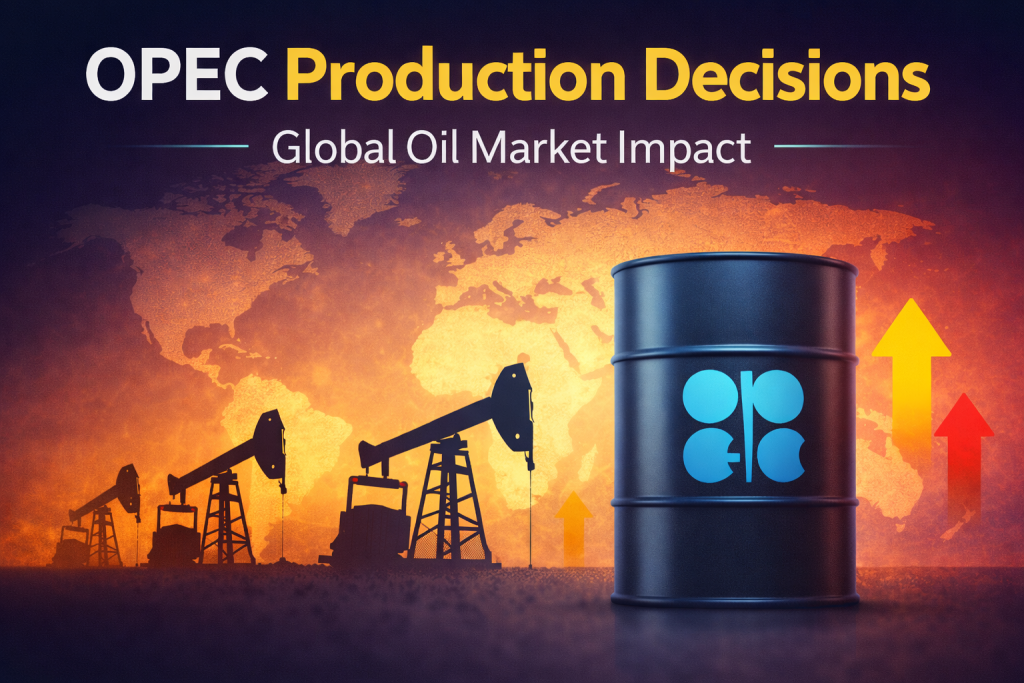
OPEC Production Decisions continue to influence global oil prices and energy markets…
OPEC Production Decisions play a crucial role in shaping the global energy market. The Organization of the Petroleum Exporting Countries (OPEC) and its allies, commonly known as OPEC+, regularly review production levels to maintain balance in the global oil supply. These decisions are closely monitored by governments, investors, and energy analysts around the world.
For countries like India, which depend heavily on imported crude oil, OPEC Production Decisions can significantly influence fuel prices, inflation levels, and economic stability. As global demand fluctuates due to geopolitical tensions and economic trends, OPEC’s policies often determine the direction of international oil prices.
Why OPEC Production Decisions Matter for the Global Energy Market
The global oil market operates on a delicate balance between supply and demand. OPEC Production Decisions directly affect this balance because the member countries collectively produce a large share of the world’s crude oil.
When OPEC decides to reduce production, the global oil supply tightens, often leading to higher prices. On the other hand, if the organization increases production, the additional supply can push prices lower.
Energy experts frequently analyze OPEC Production Decisions to understand how future oil prices may behave. Market stability often depends on how well OPEC manages supply levels in response to global demand.
According to several international energy reports, coordinated production adjustments have historically helped stabilize oil markets during periods of economic uncertainty.
OPEC Production Decisions and Their Impact on India
India is among the world’s largest importers of crude oil, making it particularly sensitive to changes in global oil prices. As a result, OPEC Production Decisions can directly influence India’s import costs and domestic fuel prices.
Higher oil prices may increase transportation and manufacturing costs, which can eventually affect inflation. Conversely, stable or lower prices can support economic growth and help manage energy expenses.
India has been actively diversifying its energy sources and strengthening relationships with multiple oil-producing nations. Nevertheless, OPEC Production Decisions continue to play a major role in determining the cost of crude oil imports.
Energy analysts often point out that India closely monitors OPEC meetings and policy announcements because they provide early signals about potential shifts in the global energy market.
Global Economic Factors Behind OPEC Production Decisions
Several factors influence OPEC Production Decisions, including global economic growth, geopolitical tensions, and fluctuations in energy demand.
For example, during periods of economic slowdown, oil demand may weaken. In such situations, OPEC may reduce production to prevent prices from falling sharply. Similarly, when global demand rises, the organization may increase supply to stabilize markets.
Another factor affecting OPEC Production Decisions is the role of non-OPEC producers such as the United States. The rise of shale oil production has introduced additional supply into the market, requiring OPEC to adjust its strategies accordingly.
Energy policy analysts suggest that cooperation between OPEC members and allied producers remains essential for maintaining balance in global oil markets.
Future Outlook for OPEC Production Decisions
Looking ahead, OPEC Production Decisions will likely remain a key factor influencing global oil price trends. As the world gradually transitions toward renewable energy sources, traditional oil producers are expected to adjust their strategies to maintain market relevance.
However, oil continues to play a central role in transportation, manufacturing, and energy generation worldwide. Because of this ongoing demand, OPEC Production Decisions are expected to remain highly influential in shaping the future of global energy markets.
For India and other major importers, monitoring these decisions will remain essential for managing economic planning and energy security.
Conclusion
In summary, OPEC Production Decisions hold significant importance for global energy stability and oil price movements. The policies adopted by the organization influence supply levels, market confidence, and economic planning in many countries.
For India, understanding the implications of OPEC Production Decisions is particularly important because of its reliance on imported energy resources. As global demand patterns evolve and geopolitical factors continue to influence oil supply, the decisions taken by OPEC will remain a central element in the global energy landscape.
OPEC Production Decisions are closely monitored by global energy analysts. According to recent reports published by the International Energy Agency, global oil demand continues to shift due to economic and geopolitical developments.
Energy market analysts frequently follow updates published by Reuters regarding global crude supply and OPEC policy decisions.
https://www.reuters.com/markets/commodities
Global oil market trends have been widely discussed in our recent analysis on the global energy market outlook.
https://abrnews247.com/global-energy-market
Experts have also highlighted geopolitical developments in our report on the Russia Ukraine war impact on energy markets.
https://abrnews247.com/russia-ukraine-war-impact
https://www.iea.org
https://www.reuters.com
https://abrnews247.com/global-energy-market
https://abrnews247.com/russia-ukraine-war-impact