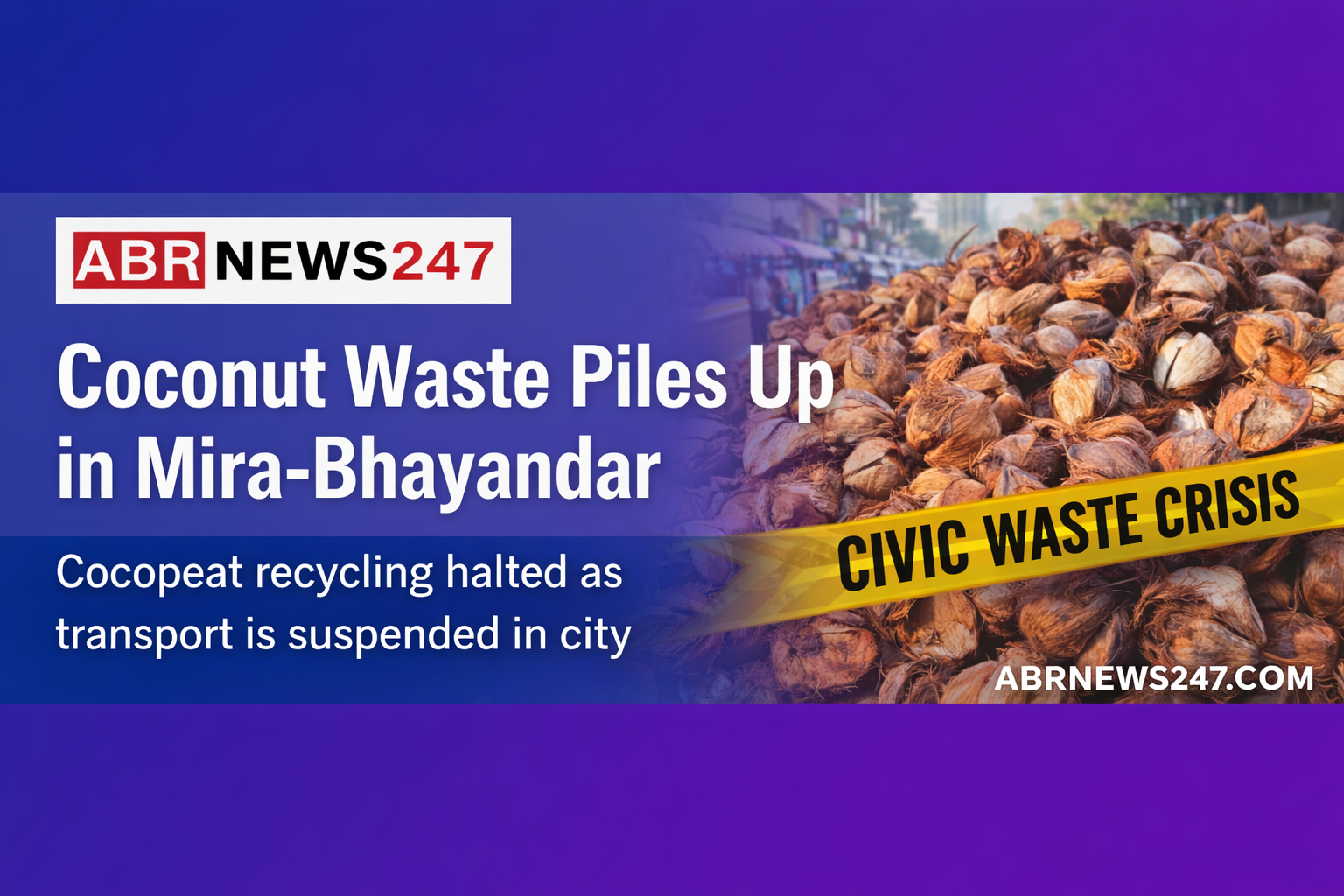
A civic initiative aimed at transforming coconut waste into eco-friendly cocopeat has turned into a major environmental concern in Mira-Bhayandar, following disruptions in the city’s transport and processing mechanism.
The Mira-Bhayandar Municipal Corporation (MBMC) generates nearly 450–475 tonnes of waste daily, including 35–40 tonnes of coconut husk waste. The cocopeat project, launched to recycle this waste into nutrient-rich soil material for gardening and horticulture, initially showed promise in reducing landfill burden.
However, the project has faced serious setbacks after the special transport system used for coconut waste collection was abruptly halted. As a result, coconut waste has begun accumulating near residential areas, vendor zones, and streets, triggering complaints related to foul odour, pest infestation, and hygiene risks.
🚛 Transport Breakdown Triggers Crisis
Earlier, coconut waste was directly transported to processing units where fibres were extracted and converted into compost and cocopeat. With the transport mechanism stalled, vendors are now left without a disposal solution, leading to open dumping and blocked drainage systems in several localities.
🏛️ MBMC Response
Civic officials have acknowledged the issue and stated that alternative transport and processing arrangements are under consideration. Negotiations with private waste handlers and transporters are reportedly underway to restore the system without significantly increasing operational costs.
Residents, meanwhile, have raised concerns over health hazards, especially during warmer months when decomposing waste worsens air quality.
🌱 Environmental Impact
Environmental experts warn that unresolved coconut waste management could reverse the city’s progress toward sustainable waste handling, undermining both public health and green initiatives.