Published: 5 August 2026
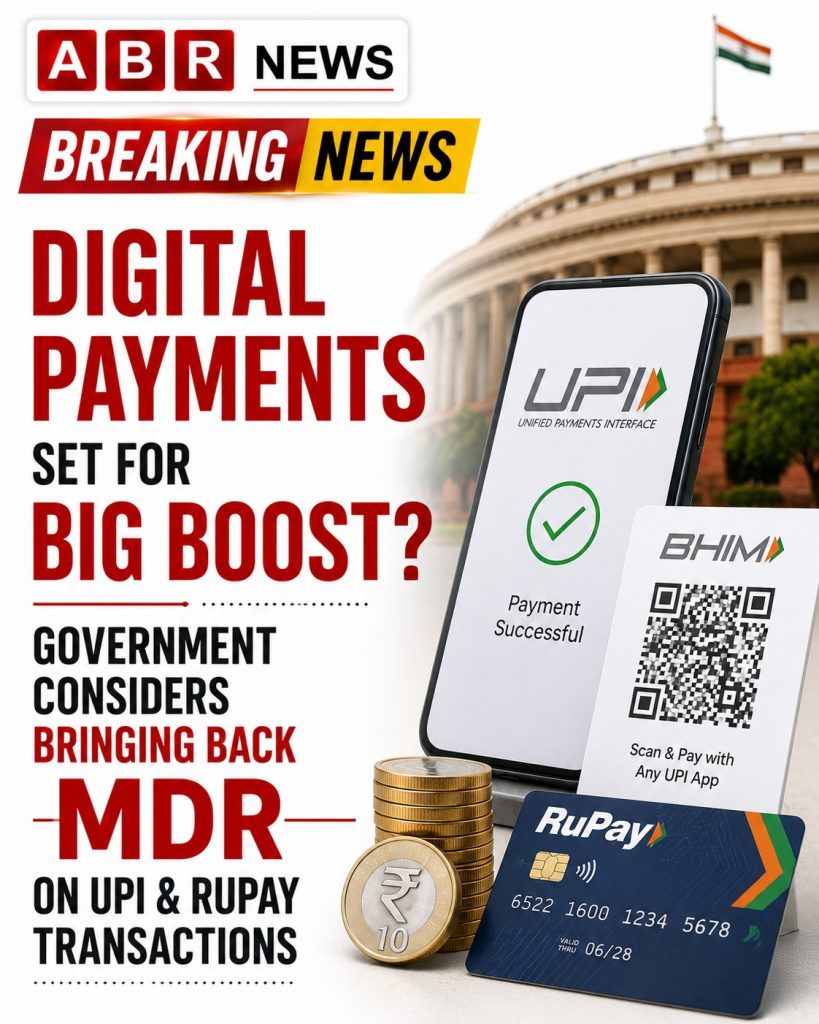
The Government of India is reportedly considering bringing back the Merchant Discount Rate (MDR) on UPI and RuPay transactions, a move that could significantly impact the country’s digital payments ecosystem. The proposal has sparked discussions among fintech companies, banks, merchants, and consumers, as India continues to witness record-breaking digital payment volumes.
Industry experts believe that reintroducing MDR could help payment service providers recover operational costs while ensuring sustainable growth for the digital payments sector.
What is MDR?
Merchant Discount Rate (MDR) is a fee charged to merchants for processing digital payment transactions.
Typically, MDR is shared among:
- Banks
- Payment service providers
- Payment gateways
- Card networks
Currently, most UPI and RuPay transactions for merchants do not attract MDR, making digital payments free for businesses in many cases.
Why is the Government Considering MDR Again?
According to reports, the government is evaluating the proposal to strengthen the digital payments ecosystem.
Possible reasons include:
- Supporting fintech companies.
- Covering infrastructure and operational costs.
- Encouraging innovation in digital payment services.
- Building a sustainable payment ecosystem.
However, no final decision has been announced yet.
What Could Change for Merchants?
If MDR is reintroduced:
- Some merchants may have to pay a small transaction fee.
- Payment service providers could generate additional revenue.
- Digital payment infrastructure may receive more investment.
- Small businesses may seek clarity on transaction costs.
The final framework will determine whether all merchants or only selected categories are covered.
Will Customers Be Affected?
At present, there is no official announcement that customers will be charged for making UPI payments.
Experts believe any future policy is more likely to focus on merchant-side charges rather than consumer transactions.
Until an official notification is released, UPI payments for users continue as usual.
Fintech Industry Reaction
Several fintech companies have long argued that maintaining and expanding digital payment infrastructure requires a sustainable revenue model.
Industry observers say that:
- MDR could improve profitability for payment companies.
- Banks may benefit from additional revenue.
- Innovation in payment technology could accelerate.
At the same time, merchant associations are expected to seek safeguards for small businesses.
Conclusion
India’s digital payment ecosystem has become one of the largest in the world, with UPI processing billions of transactions every month. If the government decides to reintroduce MDR on UPI and RuPay transactions, it could reshape the economics of digital payments while balancing the interests of consumers, merchants, banks, and fintech companies.
The government has not yet taken a final decision, and stakeholders are awaiting further clarification.
FAQs
Q1. What is MDR?
Merchant Discount Rate (MDR) is a fee charged to merchants for processing digital payment transactions.
Q2. Will customers have to pay for UPI transactions?
As of now, there is no official announcement regarding charges for customers.
Q3. Why is MDR being considered again?
To support the long-term sustainability of India’s digital payment ecosystem.
Q4. Which payment platforms could be affected?
UPI and RuPay merchant transactions may be impacted if the proposal is approved.
Q5. Has the government made a final decision?
No. The proposal is still under consideration.
Related News