1. Introduction (क्या हुआ)
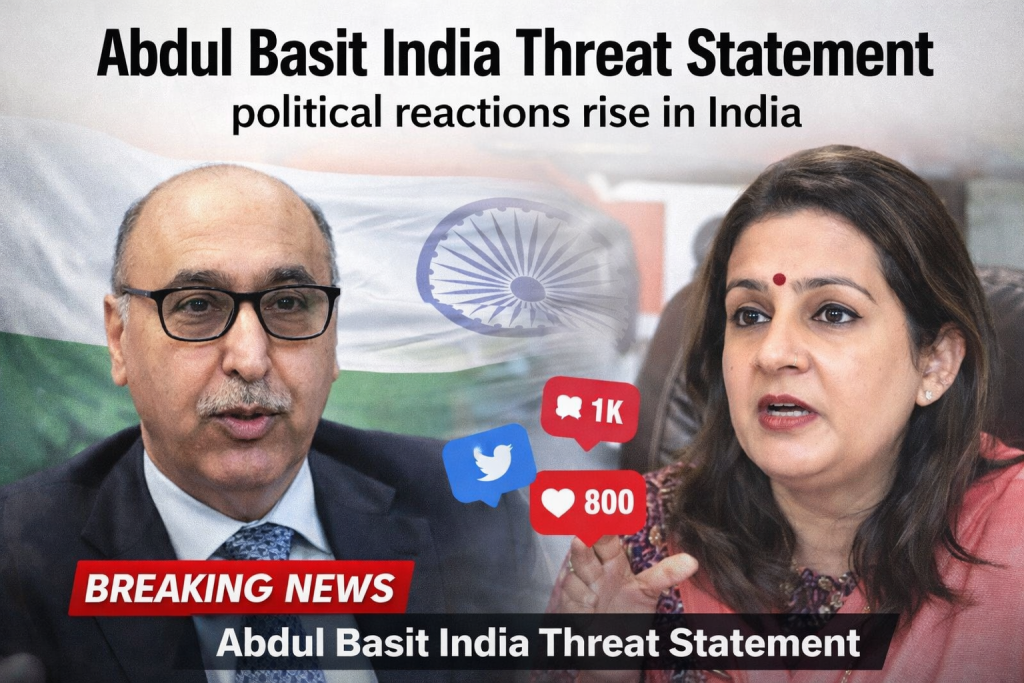
The Abdul Basit India Threat Statement has created significant political and security concerns across the country. Former Pakistani diplomat Abdul Basit made controversial remarks targeting major Indian cities like Mumbai and Delhi, which quickly drew sharp criticism from Indian leaders.
Shiv Sena (UBT) leader Priyanka Chaturvedi responded strongly, calling the remarks provocative and unacceptable. The statement has also led to heightened security measures in key metropolitan regions.
2. Background (क्यों हुआ)
The Abdul Basit India Threat Statement emerged during an international discussion where the former Pakistani High Commissioner expressed views questioning India’s sovereignty and hinted at targeting major cities.
This is not the first time such rhetoric has surfaced. Historically, diplomatic tensions between India and Pakistan have occasionally escalated due to:
- Cross-border political narratives
- Security concerns in Kashmir
- Statements from former officials
Experts believe that Basit’s remarks reflect internal political pressures within Pakistan, including:
- Economic instability
- Political uncertainty
- Efforts to influence international narratives
Indian analysts have termed the statement as “propaganda-driven and irresponsible”, aimed at creating unnecessary tensions.
3. Political Reaction in India (किस पर असर)
🏛️ Strong Response from Leaders
Priyanka Chaturvedi strongly condemned the Abdul Basit India Threat Statement, stating:
- India is fully capable of defending itself
- Such threats will not be tolerated
- Pakistan must face consequences for irresponsible remarks
She emphasized that India’s sovereignty is non-negotiable and warned against any attempts to destabilize the nation.
🇮🇳 National Sentiment
The statement triggered:
- Public outrage
- Strong reactions on social media
- Calls for strict diplomatic action
Political leaders across parties have united in condemning the remarks, showing a rare moment of consensus.
4. Security Measures in Mumbai and Delhi
Following the Abdul Basit India Threat Statement, Indian security agencies have taken precautionary steps:
🚨 Increased Vigilance
- High alert issued in Mumbai and Delhi
- Border areas placed under surveillance
- Intelligence agencies activated
🛡️ Cyber Monitoring
- Social media activities are being tracked
- Suspicious online behavior under observation
🏙️ Urban Security Boost
- Additional deployment of police forces
- Security checks intensified in public areas
According to Home Ministry sources, these measures are precautionary and aimed at ensuring public safety.
5. Expert / Strategic Analysis
Security experts believe the Abdul Basit India Threat Statement is more rhetorical than actionable but should not be ignored.
📊 Key Observations:
- Such statements are often used for political signaling
- They rarely translate into direct action
- However, they can influence public sentiment
🌍 Diplomatic Perspective:
- India is expected to raise the issue at international forums
- Diplomatic channels may be used to issue formal protests
- Global pressure on irresponsible statements may increase
⚖️ Strategic Insight:
India’s response strategy includes:
- Maintaining strong internal security
- Avoiding escalation
- Demonstrating diplomatic maturity
Experts also highlight that India’s growing global position makes it resilient against such provocations.
6. Conclusion
The Abdul Basit India Threat Statement has once again highlighted the sensitivity of India-Pakistan relations. While the remarks have triggered strong political and public reactions, India’s measured response reflects its strategic maturity.
With enhanced security measures and firm political messaging, India has made it clear that any threats to its sovereignty will be dealt with decisively.
The situation continues to be closely monitored, and authorities remain vigilant to ensure peace and stability across the country.
India Pakistan latest updates
India national news coverage
🔗
5.1 Public Reaction and Social Media Impact
The Abdul Basit India Threat Statement has not only triggered political reactions but also sparked widespread discussion across social media platforms. Hashtags related to national security and diplomatic tensions began trending shortly after the statement surfaced.
Many users expressed concern over:
- The safety of major cities like Mumbai and Delhi
- The increasing frequency of such provocative remarks
- The need for strict diplomatic responses
At the same time, several voices supported the government’s measured approach, emphasizing the importance of maintaining calm while ensuring preparedness.
Digital platforms have become a key battleground where narratives are shaped quickly. Authorities are actively monitoring online conversations to prevent misinformation and panic.
5.2 India’s Diplomatic Position Strengthens
From a diplomatic standpoint, the Abdul Basit India Threat Statement may further strengthen India’s position on the global stage. India has consistently maintained a stance of zero tolerance toward threats and terrorism.
Key diplomatic advantages include:
- Strong global alliances with major countries
- Recognition as a stable and responsible power
- Increased support in international forums
Experts believe that such incidents often reinforce India’s credibility, as the country responds with restraint while ensuring security readiness.
5.3 Long-Term Strategic Implications
The long-term impact of the Abdul Basit India Threat Statement goes beyond immediate reactions. It highlights the importance of:
- Continuous intelligence strengthening
- Advanced surveillance systems
- Inter-agency coordination
India has been investing heavily in:
- Smart city security infrastructure
- AI-based threat detection
- Cyber intelligence networks
These developments ensure that any potential risks are identified and managed proactively.
5.4 Focus on National Security Preparedness
The recent developments have once again brought national security into focus. Government agencies are working to ensure that:
- Emergency response systems remain active
- Coordination between central and state authorities is seamless
- Citizens remain informed but not alarmed
Security experts emphasize that preparedness, rather than panic, is the key to handling such situations effectively.