📌 Table of Contents
- Introduction
- What Happened
- Background of GPU Export Restrictions
- How the Smuggling Network Worked
- Impact on Tech Industry
- Market & Expert View
- Regulatory & Legal Implications
- Conclusion
🔴 Introduction (Focus Keyword at beginning)
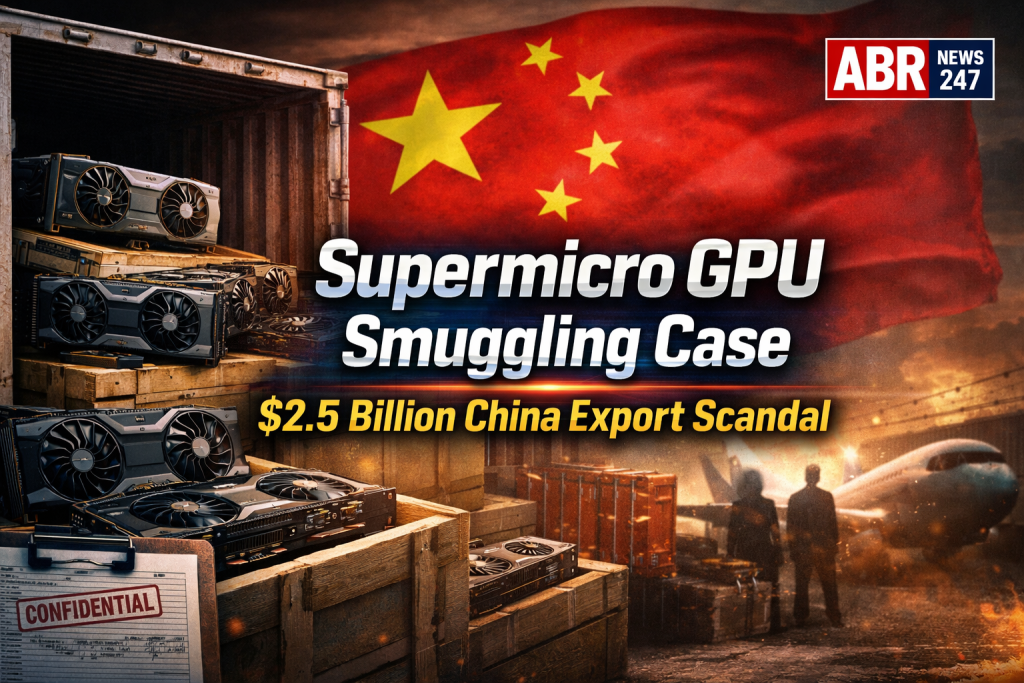
Supermicro GPU Smuggling Case has shocked the global technology and semiconductor industry. Reports suggest that a co-founder of Supermicro has been arrested over allegations of illegally exporting high-end GPUs worth nearly $2.5 billion to China.
This development comes at a time when the United States has imposed strict export controls on advanced AI chips and computing hardware. The case highlights the growing tension between global demand for AI infrastructure and government regulations.
🟠 What Happened
According to initial reports, authorities have accused a key executive linked to Supermicro of orchestrating a large-scale smuggling operation. The alleged activity involved exporting restricted GPUs—commonly used in artificial intelligence, machine learning, and high-performance computing—to China.
The value of the shipments is estimated to be around $2.5 billion, making this one of the biggest tech-related smuggling cases in recent years.
Officials claim that the operation bypassed export restrictions by using third-party intermediaries, shell companies, and complex routing channels across multiple countries.
🟡 Background: Why GPUs Are Restricted
To understand the Supermicro GPU Smuggling Case, it is important to know why these chips are sensitive.
High-end GPUs are critical for:
- Artificial Intelligence (AI) training
- Military simulations
- Data centers
- Advanced research computing
The U.S. government has imposed restrictions on exporting such chips to China due to national security concerns. These restrictions are aimed at limiting China’s access to advanced computing power.
Major companies like NVIDIA and AMD have also faced export limitations on their top-tier chips.
🔵 How the Smuggling Network Worked
Investigators believe that the Supermicro GPU Smuggling Case involved a structured network designed to avoid detection.
Key methods allegedly used:
- Use of third-country routing (e.g., shipments through Southeast Asia or Middle East)
- Creation of shell companies to mask end users
- Mislabeling of hardware components
- Breaking shipments into smaller consignments
These tactics allowed restricted GPUs to reach Chinese buyers despite global export controls.
🟢 Impact on the Tech Industry
The Supermicro GPU Smuggling Case is expected to have far-reaching consequences.
1. Increased Regulatory Scrutiny
Governments may tighten export compliance rules further.
2. Supply Chain Disruptions
Companies may face delays due to stricter verification processes.
3. Reputation Damage
Supermicro’s brand credibility could be affected significantly.
4. AI Industry Slowdown
If restrictions tighten further, AI hardware supply could become constrained globally.
🟣 Market & Expert View
Industry experts believe this case highlights a deeper issue—massive global demand for AI chips.
Analyst Insights:
- Demand for GPUs is outpacing legal supply channels
- Black-market networks may be expanding
- Export controls may need modernization
Some analysts also warn that cases like the Supermicro GPU Smuggling Case could lead to:
- Higher GPU prices
- Increased compliance costs
- More geopolitical tensions
⚖️ Regulatory & Legal Implications
The legal consequences of the Supermicro GPU Smuggling Case could be severe.
Possible charges include:
- Violation of export control laws
- Financial fraud
- Conspiracy and illegal trade
Authorities may also:
- Impose heavy fines
- Restrict business operations
- Launch wider investigations into similar networks
This case could set a precedent for future enforcement actions in the semiconductor industry.
📊 Industry Outlook
The Supermicro GPU Smuggling Case comes at a time when:
- AI investment is at an all-time high
- Governments are increasing tech surveillance
- Cross-border trade is becoming more regulated
Companies involved in hardware exports will now need:
- Strong compliance frameworks
- Transparent supply chains
- Real-time tracking systems
🧾 Conclusion
The Supermicro GPU Smuggling Case is more than just a corporate controversy—it reflects the evolving dynamics of global technology competition.
As AI becomes the backbone of future economies, control over computing power is becoming a strategic priority. This case may push governments and companies to rethink how technology is traded, monitored, and regulated worldwide.
The coming months will be critical in determining how deep the investigation goes and what long-term impact it will have on the semiconductor and AI industries.
For deeper insights on AI chips and export regulations, refer to NVIDIA Official Website and regulatory updates from U.S. SEC. Latest global technology coverage can also be found on Reuters Technology News.
Also read our detailed coverage on latest technology news and AI chip market updates for more insights on global semiconductor trends.
Supermicro GPU Smuggling Case – $2.5 Billion China Export Scandal